Rex Edmund Goddard – Martin Granger – Peter Gregory – Eric Groome – Stafford James Hammett – John Hawker – Frederick Ronald Hobday – Joan Hunt – Joan Jeanes
Rex Edmund Goddard OBE (1919-2022)
November 6, 1919 – February 15, 2022 Rex Goddard, a longtime resident of Alton Pancras, died on February 15 at the age of 102. Rex and his wife Jill bought their house ‘Blades’ in Alton Pancras as a home for school holidays while he was a teacher and housemaster at Epsom College in Epsom, Surrey. Rex actually retired from Epsom in 1980 at which time he and Jill moved to Alton Pancras permanently. After his time in the Army, Rex became a teacher and taught mathematics at Epsom.
To say that Rex ‘retired’ truly misrepresents the extraordinarily active life that continued after his teaching career ended. Amongst many roles he was actively involved with Alton St Pancras Church as Treasurer; was Chairman of the Governors of Piddletrenthide School; Chairman of the Bridge Educational Trust; and Chairman of the Alton Pancras Trust. He also maintained his long relationship with rifle shooting and the Bisley Shooting Ground in Woking after leaving Epsom. Rex also established and championed the Alton Pancras Wildlife Area for use of Alton Pancras residents and children from nearby schools.
Rex and Jill had three children, Hugh, Graham, and Alison. Hugh became a doctor based in Wells and has recently retired. Alison lives in Chicago in the US with her husband Steve. Graham tragically died when only a young man and is buried in Alton St Pancras churchyard with Jill, and now with Rex. Graham’s daughter Clare (Rex’s granddaughter) was married in Alton St Pancras Church on August 10, 2019. Following Rex’s funeral at Alton St Pancras Church on March 15 this year, a Service of Thanksgiving for Rex’s life was held at Epsom College on Saturday August 13. The service was conducted by The Reverend Canon Tony Monds, the former incumbent in this Benefice and one of four tributes to Rex was given by another resident of Alton Pancras.
Janet Keen
Martin Granger (1939-2012)
Martin was a quiet, private man so was probably not known by many except those close to his latter-days Piddlehinton home. He joined the BBC aged 19 and worked for the Overseas Radio Service from Bush House for 33 years, as presenter, studio manager, announcer, and producer of English by Radio, teaching the language to thousands of overseas listeners. Naturally, he spoke impeccably and when he took voluntary retirement in 1992 he was presented with whiskey glasses inscribed simply Martin Granger – BBC English. His BBC friend and fellow cricketer Peter Hill told the gathering at his funeral that Martin embodied prudence, decency and old-fashioned virtues, demonstrated ably when he guided his all-male cricket club, the Bushmen, through the stages of voting to accept women members.
Nick Auger talked of his cousin Martin’s upbringing in his grandmother’s house in South London after his parents divorced, and of his brief marriage. Martin’s three main interests were his mother, cricket and freemasonry. The service at Piddlehinton church, just below the cottage where Martin lived, included readings by Martin’s cousins Tim and Miles, Grant and Ellis, and Robert and Sorrell, and donations were towards a portable scanner scheme run by the Royal College of Surgeons.
Peter Gregory (1940-2021)
Pete was born at home in Piddlehinton on the 9 September, 1940 and started at the Piddlehinton Church of England school when he was 5. It became apparent that Peter was not able to keep up with the other children, and he was kept at home where Mum did her best to help him. After some time, Pete learned to make trays using cane. He became quite good, but Dad was left to do the “fiddly” bits at the top. He also made wool rugs, with help from Mum when he became bored. There were sold or used at home and continued for many years.
Pete was given a place at the Ridgeway Day Centre in Weymouth for similarly handicapped people and it was here that he met Kathy Voss, who remained a close friend for many years. They were in the social club and went on annual holidays with the club to various Butlins camps around the country, including a trip to Blackpool. Pete always came back with at least one addition to his hat wardrobe!
Pete was a great and loyal fan of the village football team and would watch their home games whatever the weather. He was never able to read but could recognise the local team and would check out the results on a Thursday in the Evening Echo.
When Mum died in 1989, Pete, after a spell with older brother John in Dorchester, went back to the bungalow in Piddlehinton by himself, with help from home care. He continued with the daily trips to Weymouth. At the time he had a very good social worker, who helped him with his weekly shopping at the Village shop. As I said earlier, he could not read, but he could copy out his shopping list…things we might find on the list after tea, coffee and bread……domestos kills all known germs!
It was felt that Pete was becoming isolated in the village, so social services arranged an upstairs flat in Lubecke Way, Fordington in January 1996 with home care and a social worker. Saturday morning would find him walking round Dorchester, looking for Kathy, which was usually successful, and they would end up in a café, on Pete of course, ever the gentleman.
In January 2015 Pete moved to a downstairs flat which suited him better. In December 2015 he became unwell. Medically he was not able to return to his flat, so a place was found for him at Whitway Nursing Home near Dorchester. When asked, he said he wanted to stay there. We would visit and take him out for lunch or tea at various locations.
Unfortunately, he suffered a stroke in April 2020, spent time in hospital and then moved to Casterbridge Manor Care Home in Cerne Abbas, where he was lovingly looked after until his passing.
Pete was a loving, cheery, cheeky chappie, who loved hats and pink shirts. He was always tidy, never seen without a tie, clean shoes, and a hat. He could be frustrating at times when, for instance, Mum, Dad, and I would be waiting in the car, with the engine running, off to see Mum’s sister in Stockbridge and he would still be in bed. Eventually, he would emerge, muttering, and we would be away.
But that was Pete, he was my brother and I loved him. God bless.
David Gregory
Eric Groome (1934-2016)
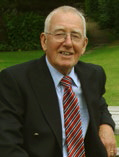
Eric was the seventh of eight children born to John and Daisy Groome of Granville Road, Parkstone. His father died of tuberculosis when he was 9 years old and thereafter Eric took on a practical, fatherly role to help his family through difficult times. In particular he developed an interest for gardening and growing vegetables, where Eric’s love for gardening must have first developed.
At the end of the Second World War, Eric’s saving grace was the return of the woodwork teacher to Kemp Welch School who reopened the woodwork classroom. As a young teenager Eric developed a passion for working in wood and on leaving school he secured a wood working apprenticeship with the company Muscle White and Simpkins in Bournemouth. In 1954 Eric was called up to take part in National Service where he was a woodworker in the Royal Electrical and Mechanical Engineers, stationed in South Korea.
On returning from South Korea, Eric was employed by a high class joinery company, EW Kingsbury and Sons. This gave Eric the opportunity to make high quality furniture, particularly in Walnut, which established him as a master cabinet maker.
In 1958 he married his childhood sweetheart Jean Brooklyn at St Clements Church, Parkstone followed by a honeymoon in Jersey. Eric and Jean had a bungalow built on a plot of land they had purchased at Corfe Way in Broadstone which became a happy family home for the next 30 years with their two daughters, Paulette and Beverly. To support his family Eric swapped his cabinet making career for working in the caravan industry at BK Caravans. He progressed from foreman, to designing caravan interiors, to eventually becoming a director until his retirement from BK Bluebird in 1991.
Eric and Jean made the perfect gardening couple – their garden at Broadstone was truly spectacular. They were keen and enthusiastic members of the Broadstone Horticultural Society and Eric was the gardener who won many first prizes and trophies, especially for his vegetable entries. He will be remembered for his incredible gardening knowledge and how he was always so willing to share this knowledge. He encouraged and supported other like-minded gardeners to strive to do their best and aim higher, which ultimately raised the standards within the garden society.
In 1991 Eric and Jean started a new chapter in their lives when they moved to Alton Pancras. Both now retired, (most people would be sitting back and taking life a little more easy), Eric and Jean spent the next twenty five years transforming their house and garden into a lovely home.
A talented and passionate gardener, Eric will be remembered for his desire to always work on a grand scale! This included the mammoth greenhouse, the rockery designed and created by himself using two lorry loads of Purbeck stone and his rather unique pergola structure.
Once Eric and Jean had settled into village life at Alton Pancras, they soon joined the Piddle Valley Gardens Club and both became committee members. At that time the Club required new energy and innovation. Using his expertise at Broadstone, Eric’s influence and impact was pronounced and immediate. This resulted in the reintroduction of the Spring Flower Show and greater interest in producing vegetables and flowers of the highest quality. As a consequence membership of the Club increased substantially.
The Summer Show of 2000, which took place in a marquee as part of the Millennium Celebrations, received high praise from the judge who commented that the quality of the produce was one of the best he had ever judged at a village event and the first he had experienced in a marquee for many years. To a large extent this success was due to Eric’s input. The sheer number of prizes he won at shows is unlikely to be repeated in the future. Mention must also be made of the marvellous displays of flowers and vegetables that Eric produced to decorate the Memorial Hall for Club harvest suppers.
Later in his life Eric found another love. He joined the local art club where he spent many long hours creating botanical art. His paintings were exquisite and it seemed that yet again Eric was able to turn his magical hands to a new skill. Each year family and friends awaited the arrival of Eric and Jean’s Christmas card with great anticipation, knowing it would have an Eric masterpiece on the front.
Eric was a great asset to have in the valley. He also got involved in local projects such as the millennium seat and making two notice boards for the village.
Eric was everyone’s friend. He will be remembered for his perfectionism and his inspiration to others. Eric was quiet, unassuming and yet generous with his expertise. He had true magic in his hands whether it was in the garden, in the workshop or with a paintbrush. The impact of Eric’s twenty-five years in the Piddle Valley cannot be overstated. The Garden Club will not see the like of him again.
It was Eric’s wish to remain at home during the last months of his life, which was made possible by the amazing care and support of Dr Dobbs and the district nurses at Cerne Abbas Surgery, the Park House care team in Weymouth and the local Marie Curie nurses. Eric passed away peacefully at his home with Jean and his two daughters at his side. He also leaves behind five grandchildren.
Stafford James Hammett (1922-2011)
Stafford was born in Exeter and was educated at Shebbear College, North Devon, a Methodist School, where his love of music, particularly organ music, was born and where he sang with the School Choir.
In the Home Guard, he witnessed the Air Raid destruction of large parts of Exeter. From there he joined the Navy as a seaman gunner on a Destroyer on convoy duty out of Scapa Flow. Once commissioned (and skipping quickly past his accidental collision with an anchored vessel off the Isle of Wight), he became commander of his first ship aged just 21, a landing craft used in the Normandy landings in 1944, taking Canadian Engineers and tanks to clear mines from Juno Beach. Promotion to full Lieutenant on a Gunboat with a crew of 28 seaman and marines soon followed.
His love of the sea remained with him and family holidays with four disparate children, Stafford’s Sally and Mandy, Audrey’s Patricia and Gordon, always involved some seaside adventure, from rough sea crossings to perilous dinghy sailings. He was a sanguine commander and soon had his motley crew licked into shape! Much later in life, when faced with increasing debility brought about by his long battle with lung cancer, he liked nothing better than a drive by the sea.
1947 saw the start of a career in marketing and sales at Communication Systems worldwide, with East Africa and the Far East his early stamping grounds, later joining Rank Xerox at the beginning of the office technology revolution in the UK where his skill won him numerous awards and prizes. He also had a fascination with kitchen and domestic gadgets and his retirement ahead of his wife, Audrey, gave him the opportunity to make ample use of these! It was at this point he honed his cooking skills, and in particular enjoyed making puddings (his specialities were junkets and pavlovas). He was also keen on photography and cine filming and has a substantial collection of slides and films from his days abroad.
Cricket was another interest; from early prep school success onwards, as an opening batsman, he loved that most English of games: its team ethic, its test of character, its ebb and flow. It was the opener’s typical qualities of patience, courage, steadfastness and balanced judgement that he espoused in life beyond the pitch that were to serve the family so well through its upsand- downs.
In 1984, Stafford and Audrey moved from Layer Breton in Essex to Dorset, settling in Plush. Stafford was always most appreciative of the care he received both from Cerne Abbas Surgery and the Dorchester and Poole Hospitals during his illness, and the family would like to add their thanks to his. Our grateful thanks too, for the many warm messages of condolence that we have been sent. He is much missed.
John Hawker (1944-2011)
John was born in Piddletrenthide, the only son of Wilfred and Matilda (known as Phyllis), attended the village school, then on to the ‘big school’ at Buckland Newton. For the next 30 years he worked for David Wightman at Bellamy’s farm, married Ann from Godmanstone in 1968 and set up home at Meadow View, which nowadays looks across to the valley’s school. Home comprised John and Ann’s children Andrew, David and Jo, affectionately known as Porky, Dip and Fuss respectively, and Ann’s father.
They moved to Waterfall Nook cottage, formerly known as The Retreat, close to the Memorial Hall in 1989 and John worked for Evans and Pearce at Trent near Sherborne as a crop specialist for 13 years. In 1996 he had a freak accident, causing him to lose sight in one eye, which meant losing his HGV Class 1 licence.
John was later employed by Nigel Powell at Middlemarsh Saw Mills and finally Camelco at Milborne St Andrew. He enjoyed working with wood and was good at DIY and repairing engines, as well as gardening and fishing, and in Robert White’s words “he had a real passion for agriculture and the countryside that shone through in all that he did and said.”
Ann Hawker and family would like to thank everyone for their letters and cards, the care and kindness of the Rev. Tony Monds, to Sue Beckingham and her team of helpers, to all who attended the crematorium and those who made donations to John’s chosen local causes, the Air Ambulance, RNLI and Cerne Abbas surgery.
“For me as a child growing up there is hardly a memory of the Evans and Pearce company that does not contain John in some form, whether him lying underneath a broken seed cleaner covered in dust, hammer in hand, or perched on his favourite milk churn in the rest room telling of the latest exploits of his beloved family; time spent with John was always entertaining. The greatest testament to John is the fact that of all people that have worked for this company over the years, the only one that the customers ask after is John. He was highly regarded by customers and work colleagues alike. I am glad that I had the chance to work with him and learn from his huge knowledge.”
Robert White, Evans & Pearce
Frederick Ronald Hobday (1930-2013)
Fred and Beryl Hobday were well-known in Piddletrenthide for the attractive garden of their bungalow home, Willow Lawn, until moving to Gillingham (Dorset) for a smaller garden and to be closer to their children. Worcester-born, Fred joined the Navy from school and spent his ten years mainly in the Mediterranean, often playing football against local sides, sometimes with armed guards patrolling the touchlines! Whilst on board, his ship was sent to recover the wreckage of a Comet airliner which had crashed with the loss of all passengers and crew.
On discharge, he joined British Telecom, initially erecting poles and kiosks while studying and regularly passing exams led to him becoming head of cabling and maintenance in the Tunbridge Wells area, badly affected in the Great Storm of 1987.
His first marriage broke down but he maintained an excellent relationship with his three children to this day. In 1969 he married Beryl and set up home in Halesowen, moving on promotion to Wadhurst, Sussex, which made Beryl a commuter for the next ten years, before retiring to Piddletrenthide.
In 1938 young Fred was taken to watch West Bromwich Albion play football and became hooked, occasionally meeting up with his two sons to attend matches. At a Piddle Valley Gardens Club function, a member interrupted a deep conversation to ask Fred what element of gardening was being so earnestly discussed ? He responded “WBA” and often wondered, with amusement, if the person concerned ever discovered what that meant in gardening terms!
The large Piddle Valley contingent at Fred’s cremation service at Yeovil showed the warmth and feeling for Fred and Beryl’s years in our midst.
Joan Hunt (1918-2012)
Joan Hunt could truly claim to be ‘Piddletrenthide born and bred’. Born on Twelfth Night 1918, to parents, Charles and Elizabeth who were living with son George in Kirby Cottages, Joan was educated at the village school. According to her contemporaries, she was a very bright pupil, and aged eleven won a coveted County Scholarship to the Grammar School in Dorchester. Alas without transport to get there, and whilst local boys in a similar position could cycle, Joan had to content herself with continuing at the village school, with the intention of becoming a pupil teacher. Unfortunately the scheme folded and Joan’s parents weren’t able to make provision for her to travel to Salisbury to further her education at the teacher-training college, so she was obliged to leave school without formal qualifications and her wish to teach was never fulfilled.
On leaving school she worked at the Vicarage, looking after the young daughters of the Rev Boyer, who still remember her with great affection. With the outbreak of WWII Joan signed up to the ATS and was sent for training in Carlisle; here she was finally able to take exams and soon promoted to sergeant, with the chance of an overseas commission once the war had ended but Joan’s wish was to return to her family and the village she loved. She soon found work in the next door Post Office where she remained for ten years, only leaving to nurse her sick mother. Later working in Herrison Hospital’s Occupational Therapy Department.
Joan took a lively interest in local and national affairs through her love of reading the daily paper and books provided by the Mobile Library; she completed at least two crossword puzzles a day, joined many village clubs including the pre-war ‘Social Club’ three nights a week, local dances, village shows and whist drives. With Win Blake, Phil Hawker and sister-in-law Stella Hunt (known as the Lavender Hill Mob) she visited National Trust houses, theatres and gardens.
In 1953, Joan travelled to London for the Coronation and sat on the pavement all night, for a prime viewing spot. This year she didn’t have to travel so far to see the Queen. Following her move to The Hayes Residential home in Sherborne, she was presented to Her Majesty at a reception there which she described as the most exciting day of her life. Her many friends will miss the ready kindness and wicked sense of humour, which stayed with her to the end.
Joan Jeanes (1927 – 2012)
Born at Troytown near Puddletown, the eighth of the nine children of William (Bill) Diment and Louisa, Joan’s first-name was Violet, which she hated. She grew up in Stratton and later while working at Woolworths she met and married the tall, handsome Charlie Jeanes, who also seemed to dislike his given name and was always called Pete! In 1948 they moved to the brand-new 7 South View at White Lackington, the envy of many as they had bathrooms and indoor flush lavatories, and instantly made friends with their neighbours Pat and Doug Riggs. Soon they had their two boys, Owen and Barry, supplemented at times by a succession of children from the East End of London who came for a holiday in the country but seemed to stay for months.
Joan liked to be busy. Secretary of Piddletrenthide WI, helping the Saunders family of Waterston and Wrights at nearby Waterways where she enjoyed babysitting Liz and Mary, and much later as home-help for the Gordons in Piddletrenthide; waitress at the Brace of Pheasants, working nights at the Dorchester Cheshire Homes, and when the boys grew up, working full time for Millers the pie-makers at Poole. Family was everything, especially grandchildren Simon and Philippa, Hannah and Daniel. In 1997 Joan and Pete celebrated their Golden Wedding but sadly Pete died two years later. Moving to Wightmans Orchard she enthusiastically joined in the many activities there. During the last days of her life she seemed to believe, perhaps know, that after a separation of 13 years, she would soon be reunited with her beloved Pete.
 Piddle Valley News and Views