Ione Dorothy Banner – John Browning – Peter Chance – David Christophers - Peter Frederick Clayton – Rose Marion Cosh - Raymond Hollesley Coverdale
Ione Dorothy Banner 1926-2013
Ione’s story would make a good novel. Born in Karachi, the only child of Rachel and Edwin Price, he highly educated and working in the cotton and jute trade. Edwin died suddenly when Ione was only eight, and mother and daughter returned to England to a small place in Richmond near London. Come the war, Ione and best-friend Wendy were evacuated to Australia. While in Adelaide she met a young Australian fighter pilot called Tom Allen. Back in post-war England, Wendy’s family introduced Ione to another airman, Gordon Banner, a veteran of Bomber Command and later a test pilot instructor at Farnborough. They married in 1951 and after his year at staff college in Canada, the family settled in a large old house in Royston, gradually filling the large number of rooms with four children, total now six, supplemented by Ione’s mother Rachel. Ione even found a use for the basement, founding a nursery school, still thriving in 2013. Later she became headmistress of a local village school, with the subsequent family move to Dorset ending her highly successful career.
When Gordon retired, he built a wooden sailing boat which he named Ione, the Greek word for ‘sea-nymph’ and all the family enjoyed south coast cruising. They also visited Australia where the two ex-pilots, Tom and Gordon had experiences to share.
Sadly, both Gordon, and Tom’s wife Liz succumbed to cancer but it was several years later before Ione and Tom met again and romance developed through some legendary holidays, including her 80th birthday cruise to Antarctica. In December 2012 she was diagnosed with cancer and the cancellation of their booked trip to Alaska was a sad consequence. Her family united in caring for her at home and there is some poignancy in the fact that her last-ever outing was to see Fiddler On The Roof at the Memorial Hall in March.
John Cawthorn Browning (5/9/1940 – 23/10/2016)
Architect, Aston Martin and Piddle Valley enthusiast
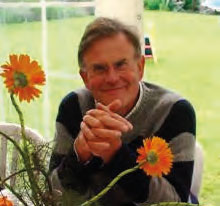
© Dot Browning
Born in London in the war, John progressed from Prep School to Merchant Taylors leaving early to join the Cunard Steamship Company. It was a job, but didn’t really give him what he wanted, which turned out to be a place in the architecture profession. He studied in his own time, then went to Oxford School of Architecture but after one year, gained a place at Selwyn College, Cambridge. He studied, rowed for Selwyn, but also took up other activities – rare amongst rowers – sailing and driving a prewar Aston Martin.
After qualifying he worked in Windsor for Edgington Spink & Hyne, then Feilden & Mawson in Norwich before joining Richard Plincke and Keith Leaman to form Plincke, Leaman & Browning in Winchester in 1971. The practice grew over the years with always a strong design ethos attracting brilliant young architects to join the team. Moving from a partnership to a limited company and becoming architecture plb, the practice numbered around 60 when John retired in 2000. The agreement at age 37 for the partners to retire at 60 seemed at that point completely inappropriate, so the retiring partners formed a new practice Regeneration Partnership based at first within the aplb office to continue with smaller scale projects. By the time Richard, Keith and John retired, they had moved from a mix of local extensions and houses to multi-million pound educational and other projects around the UK, the Channel Islands and Europe. His creative flair and design integrity has been recognised throughout his career with many design awards for his buildings.
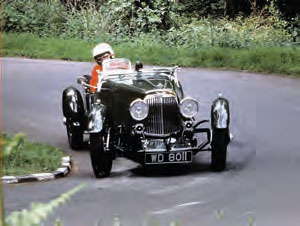
Wiscombe Hill Climb © AMOC
John developed his vehicle and restoration knowledge from an early age living in London, then later at West Tytherley with young teenage children, he built a Marlin kit car. His return to Aston Martins was a DB 2/4 which he persuaded his partners and accountant to accept as his office car as it was less costly than their modern VWs! His first serious Aston restoration was ‘Florence’ the 1934 Mk II in 1989 while living at The Soke in Winchester with the benefit of a very large garage. Once complete, he entered competitive events, racing (he first raced his original Mk II at Silverstone while studying), sprints, the favourite Wiscombe hill climb, occasional Concours, touring and even using Florence for site visits.
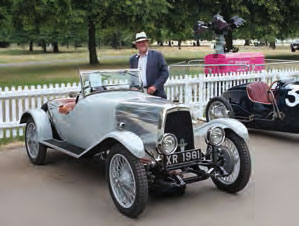
Moving to Millers Barn in Plush in 2000, John concentrated first on remodelling the house and garden. With the benefit of a large garage and vehicle lift and ready for another challenge, he acquired a DB2 and began another total restoration and on completion, with another DB2, spent five weeks touring the entire Scottish coastline. Then there was the 1923 SideValve. When seeing the car for the first time emerging from the garage with bulging exhaust, daughter Cleo exclaimed ‘Hissing Sid’, being reminded of her childhood memory of Keith Michell and Captain Beaky and his band “Said Reckless Rat, ‘That’s rather funny, There’s something jumping in his tummy.’ Said Captain Beaky, ‘Well, I’m blowed, Hissing Sid has swallowed Toad.'”
After months of painstaking research and identifying parts required, he embarked on the total rebuild – the car emerged with a new ash frame (conveniently he had retained and planked an ash tree, one of six felled), new or restored parts, leather trim and grey paintwork. The name ‘Hissing Sid’ was entrenched, with all six grandchildren following the restoration in awe and lending a hand to clean and polish or go for a ride whenever they could! John enjoyed driving Hissing Sid through the Dorset hills and entering the car in the Aston Martin Greenwich Concours. He was delighted that the car continued on the road used and enjoyed by new owners, recently winning the 2016 Concours of Elegance at Windsor Castle.
Architecture and Aston Martin driving and restoration continued alongside the enjoyment of Plush and the Piddle Valley. He enjoyed walking and discovering the rolling Dorset landscape and its history, the five Valley settlements, the buildings and their character, the residents, and each year the Brendel’s wonderful Music at Plush concerts. John’s restoration of the historic Plush fingerpost outside The Brace of Pheasants set off a chain of restorations of other historic fingerposts in Dorset which have now become part of AONB policy. The Dorset and East Devon AONBs are currently subject to well advanced consideration for elevation to National Parks status due to the magnificent landscapes, complex geology and the world heritage coastline. He would have regarded this as another major step forward in protecting the Dorset landscape.
John joined the Piddle Valley Design Statement Committee contributing his professional expertise in the planning, maps and content and was delighted that on completion, the District Council endorsed the recommendations and conclusions. He followed the progress of the Parish Plan but wondered how it would work out for the Valley. In his professional role he had sought Oliver Letwin’s advice and through their meetings and discussion, it became clear that a Parish Plan would be superseded by a wider Localism roll out. A few ‘pilot’ Neighbourhood Plan projects emerged – Sherborne among them. John recognised the value of a Piddle Valley Neighbourhood Plan, could see the benefit and value for both residents and businesses so a conversation emerged and while the Sherborne project floundered, enthusiasm grew in the Piddle Valley. A packed meeting in Piddletrenthide Memorial Hall saw the establishment of the Piddle Valley Neighbourhood Plan Working Group (NPWG) under the chairmanship of Richard Drewe. John later took on the mantle of chair and steered the process forward on occasion involving Oliver Letwin in NPWG meetings at Millers Barn arranged specifically at breakfast time to suit the busy MP’s schedule. Piddle Valley News & Views became an important conduit to enable regular reports of progress on all aspects and progress of the Neighbourhood Plan. In time, and knowing that his eyesight would result in moving from Plush, the baton was taken up by Paul Johns to complete and he followed with great interest the progress of the Piddle Valley Neighbourhood Plan. Sadly, John’s sudden death occurred before the final stages of the PVNP were completed. Since then the Plan has been approved by WDDC and the Inspector leaving only the community vote to take place before the Plan is implemented.
John’s many interests ran parallel to architecture, family life and Aston Martins and he fully embraced all these worlds. He was very proud of Ben and Cleo and the 6 grandchildren, all of whom share his passion for cars and their noise! John and Dot moved to Axmouth Harbour in May to enjoy the amazing light and coastal environment – he even had plans to restore another Aston Martin! The service of celebration on the 11th November in St Michael’s Church, Axmouth saw many friends and family attending from all the chapters of his life and the opportunity to see again the Aston Martins that he had restored.
©Dot Browning | 6th December 2016
David Christophers (1943 – 2012)
A RINGING HISTORY
David Christophers died on Snowdrop Sunday after a short illness. He was a church bell ringer and Tower Captain, having been taught by his father when he was a youngster living in Bickington, Devon. Suzanne, David and their family lived in Piddlehinton for 33 years and he had regularly rung the bells at St Mary’s Church, Piddlehinton. He passed the skill on to his own sons, and he, Ashley and Simon had rung together on occasions. At David’s funeral on 16th February in Piddlehinton, bells were rung “half muffled”, remembering their Tower Captain, Churchwarden and organist for many years.
David was also a member of the Salisbury Diocesan Guild of Ringers, represented at his funeral by the Dorchester Branch Chairman, Janet Ranger, along with members of churches at Fordington, Charminster and Puddletown. A “band” was organised to ring before and after the service, and as is customary for funerals the leather shoes/cups strapped to one side of the clappers in the bells so that a “dull thud strike” alternated with a “normal bell tone strike”. With six bells at Piddlehinton Church, eight ringers took turns before the Service, ringing “call changes” and a Method called ‘Grandsire’. Respect for David was such that at the end of the Service the old tradition of striking the age of the deceased was upheld, with Richard Ellis (who had rung with David for many years) tolling the Tenor (heaviest bell) 69 times, which was immediately followed by the Treble (lightest bell) and the other bells ringing “rounds”. This was truly fitting and special way for David’s friends to pay tribute to him, and honour his memory and a lifetime’s service to the Church.
A Quarter Peal was rung in his memory, a week after his funeral, on Thursday 23rd February at the same church. The Method, ‘Grandsire Doubles’, his favourite, was rung in 46 minutes.
The Christophers family wish to give thanks for the support they have received, particularly from Revd Jane Culliford of West Stafford and Revd Tony Monds of Piddle Valley.
On 24th August, Simon Christophers started a four day walk along 90 miles of the Dorset Coastal Path to raise money for the Macmillan Cancer Support charity in memory of his father.
Suzanne Christophers
Peter Frederick Clayton (1922-2011)
extracts from the eulogy by his son charles
Peter was born Richmond, Surrey, joined the RAF from school and went straight off to war, to flying training in Florida and then into the fray aged 20. He was awarded the Distinguished Flying Cross (DFC) during his first tour of duty, in which he survived 48 missions with 97 Squadron. Then came a nine month break as a pilot instructor before returning to the fray with 156 Squadron, completing a further 36 successful missions as Squadron Leader and being awarded the Distinguished Service Order (DSO).
From war he returned to study and won his degree in electrical engineering at Corpus Christie, Cambridge. Active on many fronts, he was captain of St Georges Hill, Weybridge squash club, where he met Charles’ mother Sally. They married in 1960 and had four children, three of whom, Charles, Louise and David, attended the funeral. Mark, the fourth, died as a toddler. Peter created and ran his own business, Thames Flooring, was an avid Freemason and Master of his Lodge. In 1981 he married Jane and extended the Clayton clan, moving to Piddletrenthide. As he grew older he was proud to be Warden of the Church Keys.
Peter’s enthusiasm produced varied results. An excellent pilot, he wasn’t all that good at smooth landings and was once recorded as having landed three times, at one-minute intervals, bouncing down the runway. He played squash enthusiastically enough to land up in A&E on Christmas Day when his forceful backhand stroke split his chin! A keen gardener with a wide range of tools, while using a ‘flamethrower’ to clear weeds he accidentally ignited the hedge – and the neighbour’s garden shed behind it. It contained petrol cans and the fire brigade arrived just in time for the explosions!
Be proud of your legacy. Rest in peace.
Rose Marion Cosh (1938-2014)
Rose was born at Marnhull where her parents Albert and Nellie Elsworth ran a shop but after a year they moved to Moreton, where brother Jim was born. Albert was away in the RAF during the war so mother and the two children came to Alton Pancras to live with Rose’s aunt Louisa Allen and her uncle Bill at Number 1 The Terrace. It was very cramped there so in time they were able to move to number 2. Later, after her marriage, she would live at number 3! Mother Nellie became village postmistress in succession to the Clarks in 1946 at a salary of £56.11.0d per year. With so few phones in the village, young Rose was always being sent to various addresses to deliver messages, getting to know the village, and villagers, quite well. The advent of local supermarkets made the shop less viable so its last years were just postal services, the business offered for sale in 1976 for £15,500.
In 1970 Rose married Eddie Cosh of Charminster, who worked for the council on road maintenance, mainly driving lorries. Later, with son Gavin, they moved into the – relatively – new 2 Boldacre where she was to live until declining health in 2012 required a move to Sherborne. Rose loved Alton Pancras and its people but she also enjoyed an adventure; a keen tennis fan, she had visited Wimbledon during its famous fortnight and she and Gavin even visited friends in Egypt (not the Piddletrenthide one!). Back home, she loved the fact that from her Boldacre window she could see all five different houses she had lived in.
Among the mourners at her Yeovil funeral were past village stalwarts Brian Ralph and Dick and Mary Collins – and Charlotte Gerard of Alton Mill , for whom Rose was her nanny in Newcastle-on-Tyne, days fondly remembered.
Raymond Hollesley Coverdale (1933-2011)
Born in Dulwich, London on 24th September 1933 to parents Arthur and Grace Coverdale, Ray was the eldest by some margin to his siblings Vivien and Jeffery. He was a member of Emmanuel Church choir, Youth club and the local scout group and badminton club.
In 1959 Ray married Stella, whom he had known all of his life. Their married life started in Worcester Park, Surrey where they were committed to St Phillips Church and their children Graham, Colette and Barry were born. Much later the family grew with the arrival of spouses and grandchildren, Aiden, Ryan and Matthew.
Following one too many letter bombs at work at Victoria postal sorting office Ray and Stella took the opportunity of living the dream and moving to the countryside, thus arriving at the Post Office in Piddletrenthide. They became involved with Alton St Pancras church, with Ray being on the PCC for some 35 years. He also helped with cubs, scouts, and a youth badminton club.
On moving to Broadmayne some 13 years ago Ray became involved with St Martins Church, using his practical skills to help re-point the church boundary wall along with some like-minded parishioners who became firm friends.
Badminton remained his greatest sporting love. During illness his driving force was to play another game of badminton. Ray was known for his ‘can do’ attitude, always having some project in hand, both at home and for others. Despite ill-health for some 22 years, his aim was to live life to the full and enjoy his time, not sit around waiting for life to happen.
Ray died on 31st May 2011 and Stella and family would like to thank everybody who attended his service and for the many cards, letters and prayers received at this sad time.
Peter Chance
The Piddle Valley Gardens Club will miss Peter Chance who died late in August 2022 after a period of poor health. He was a longstanding member of the Club and served on the Committee for many years, including as Chairman and President as well as other roles. He led something of a revival of the Club after a lean period. He remained active and attended this year’s Summer Social at Harvey’s Farm and had entries. in the Summer Show.
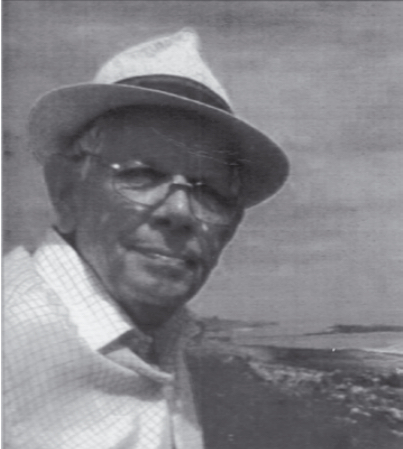
His garden in Plush was always well tended, with much help from his wife Susan, the vegetable patch especially so. He had a remarkable attachment to his fishpond, which he inspected daily in spite of determined attentions of a heron and an otter.
Year after year he exhibited man entries at our Spring and Summer Shows and regularly won the coveted prize for the Cook’s Choice of four different kinds of vegetables displayed in a basket. Another of Peter’s interests was his 1934 MG in which he attended many MG Club events and outings. He was also a keen supporter of the CPRE and served on the Committee of the Dorset Branch.
On a personal level we would like to add that Peter was the most kind, helpful and considerate neighbour for all of our 25 years in Plush.
Jane & John Preston
 Piddle Valley News and Views